

Online WSET courses offer structured, educator-supported learning with remote exams, while in-person classes provide direct tasting practice and immediate peer feedback. This guide compares the interaction levels of both formats at Rack and Return, focusing on how tasting and peer engagement differ between the two delivery methods.
Tasting Practice Differences
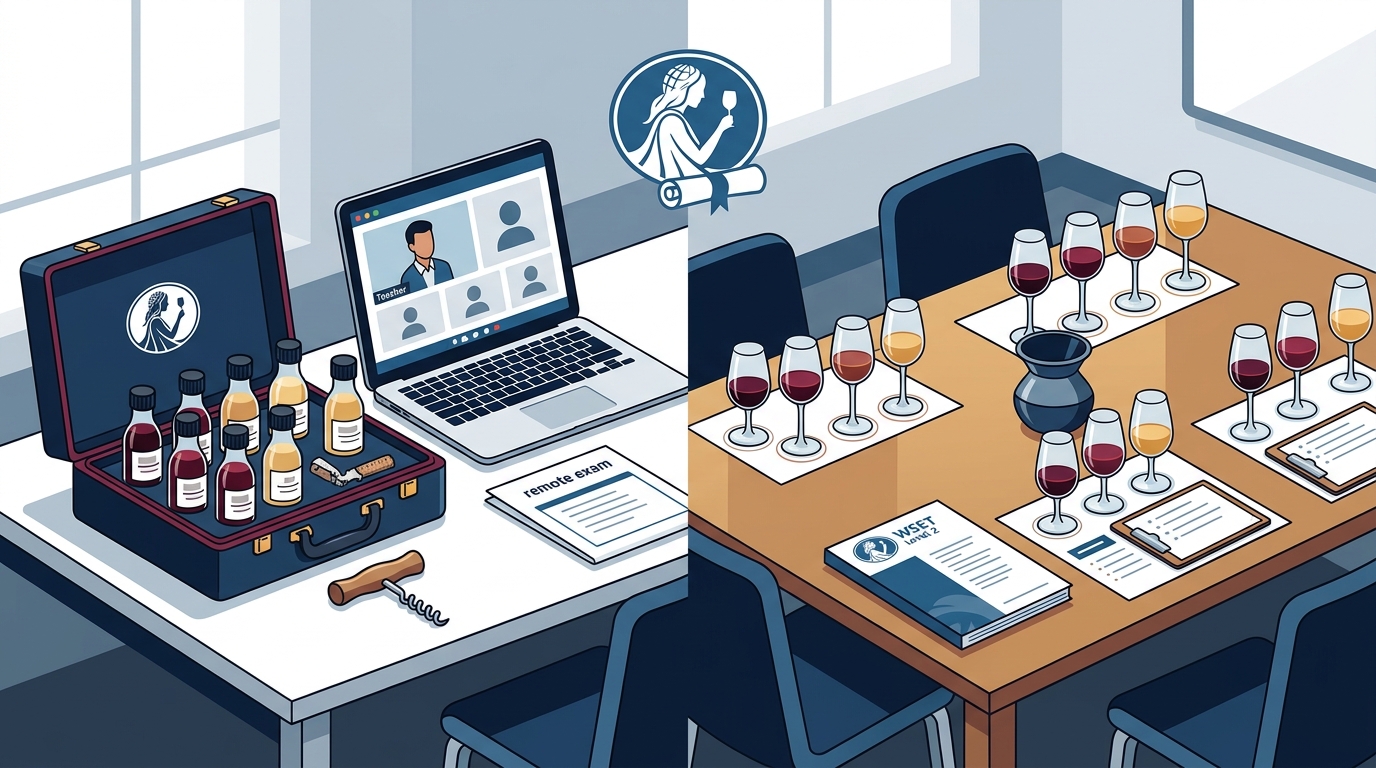
The primary distinction between online and in-person WSET courses lies in the execution of the Systematic Approach to Tasting (SAT). In-person classes allow students to taste wines simultaneously with the instructor, enabling real-time correction of sensory descriptions. Online courses require students to taste wines independently at home, often using a provided wine pack, and submit notes for later review.
Real-Time Sensory Feedback
In a physical classroom, the instructor can observe a student's reaction to a specific aroma or flavor profile and provide immediate guidance. This dynamic is difficult to replicate in a remote setting. While online platforms offer video calls, the latency and lack of shared physical space limit the depth of sensory coaching. Students in in-person courses at Rack and Return benefit from a private, well-equipped space where they can focus entirely on the wine without domestic distractions.
Home Tasting Logistics
Online learners must manage their own tasting environment. This includes sourcing the correct wines, ensuring proper glassware, and maintaining a neutral tasting atmosphere. Rack and Return provides recommended wine lists and optional wine packs for online students to facilitate this process. The interaction here is asynchronous; students submit tasting notes, and educators provide written or recorded feedback. This method builds self-reliance but lacks the spontaneous discussion that occurs when a group tastes the same bottle together.
Peer Interaction Formats
Peer interaction is a critical component of wine education, as discussing wine with others helps solidify understanding. In-person courses at Rack and Return feature limited class sizes of 6 to 14 students, fostering a collaborative environment where students can debate wine styles and share experiences. Online courses use digital platforms to facilitate group activities, quizzes, and forums, but the connection is less immediate.
Classroom Dynamics
Physical classes encourage organic conversation during breaks and tasting sessions. Students often form study groups that extend beyond the course duration. The social aspect of in-person learning can enhance motivation and retention. At Rack and Return, the focus on quality teaching and a spacious setting supports these interactions, allowing for clear, concise communication between native English and Spanish speakers.
Digital Collaboration Tools
Online WSET courses utilize learning management systems to host group discussions and collaborative tasks. While these tools allow for global connectivity, they do not fully replace the energy of a physical room. Research suggests that online students may report feeling less connected and focused compared to their in-person counterparts. However, the flexibility of online study allows students to engage with peers at their own pace, which can be beneficial for those with busy schedules.
Key Takeaways
- In-person courses offer real-time sensory feedback and immediate peer discussion.
- Class size significantly impacts the depth of peer interaction in both formats.
- Online exams are available for certain WSET levels, adding to the remote learning experience.
- Rack and Return offers both formats in Barcelona and online, catering to different learning styles.
- Asynchronous feedback in online courses builds self-reliance in tasting techniques.
- Physical classrooms foster stronger social connections and spontaneous learning opportunities.
Frequently Asked Questions
Are online WSET courses as rigorous as in-person ones?
Yes, the qualification and exam standards are identical. The difference lies in the delivery method and the nature of the feedback received during the study period.
Can I take the WSET exam online?
For certain levels, such as Level 2, exams can be taken online via remote invigilation. Level 1 exams are typically in-person, though online options may vary by provider and region.
How do I practice tasting if I am studying online?
You can purchase the recommended wines or a wine pack provided by the school. You then submit your tasting notes for feedback from the educator.
Is peer interaction limited in online courses?
While less spontaneous than in-person classes, online courses use digital tools for group activities and discussions, allowing for meaningful peer engagement.
Which format is better for career professionals?
In-person courses are often preferred by those seeking immediate networking and hands-on coaching. Online courses suit those who need flexibility to balance study with work commitments.
Does Rack and Return offer both online and in-person options?
Yes, Rack and Return offers WSET Levels 1, 2, and 3 in both online and in-person formats in Barcelona, allowing students to choose the mode that best fits their needs.
Conclusion
Choosing between online and in-person WSET courses depends on your learning style and professional goals. In-person classes at Rack and Return offer immersive tasting experiences and direct peer interaction, while online courses provide the flexibility to study at your own pace with structured remote support. Both paths lead to the same globally recognized qualification. To find the format that best suits your needs, explore the WSET courses in Barcelona or the online WSET courses offered by Rack and Return.